Original songs and learning moments

Create original nursery-rhyme videos with a gentle visual rhythm.

A useful children’s video begins with more than colourful animation. It needs a specific age range, one manageable learning or emotional goal, a predictable rhythm, and original creative choices. CartoonMakerAI helps turn that brief into a scene-based kids-song video.

Built for

Kids-content creators · Early-years educators · Parents making original stories · Learning-content teams

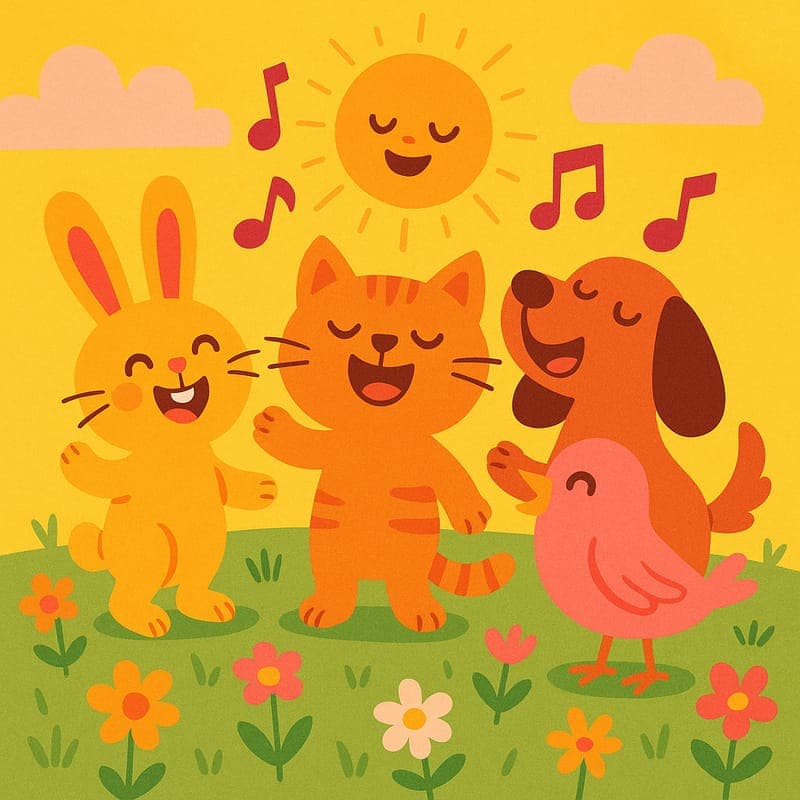
A bright children’s-book-style animal sing-along scene

The practical difference

Plan one clear learning or storytelling objective, then support it with recurring characters, readable actions, and a calm, age-appropriate visual sequence.

What the workflow helps you do

Make every scene serve the larger idea.

01

Start with a single child-centred objective

A good nursery-rhyme video does not need to teach everything at once. Choose one outcome—counting to five, a bedtime routine, naming emotions, tidying up, or taking turns—and repeat it through music, action, and visual cues.

02

Use repetition with a purpose

Repetition helps a young viewer predict what will happen next. Repeat the key phrase, the character action, the musical cue, or the visual pattern, while changing one small element each time so the story still moves forward.

03

Keep character and setting logic simple

A familiar animal guide, a stable location, and a small number of objects reduce cognitive load. The visual continuity of a scene chain supports this by making the lesson or story easier to follow from one moment to the next.

A better starting point

A production process you can repeat.

Use this as a planning sequence, not a rigid formula. The goal is to make the creative and editorial decisions before rendering so that the generated scenes have a clear job to perform.

Read the nursery-rhyme guide
  1. 01

    Define the age range and the one idea

    Decide whether the video is for toddlers, preschoolers, or early learners, then define one concept in plain language. A precise brief leads to more useful pacing, vocabulary, and visual actions than a generic request for a kids’ video.

  2. 02

    Write an original verse-and-action map

    For every line or musical phrase, describe what the child should see and do. If the lyric says ‘wash your hands,’ the visual can show water, soap, bubbles, and the recurring character completing the action—not an unrelated busy scene.

  3. 03

    Choose a calm and consistent visual vocabulary

    Use clear colour contrast, friendly expressions, a limited cast, and scene changes that support the song. Make movement and surprises serve the learning moment instead of turning the frame into constant distraction.

  4. 04

    Review for clarity, comfort, and responsible publishing

    Watch the finished sequence without sound, then with sound. Check that actions can be understood, the lyric is appropriate, the pace is comfortable, and any publishing settings or audience designation are reviewed against the platform’s current requirements.

Editorial guardrails

The part AI should not decide for you.

Write your own song or use material you can lawfully use

Original lyrics and music give the channel a stronger identity and reduce avoidable rights questions. If you adapt a traditional work, verify the status and create a meaningfully original arrangement, script, and visual interpretation.

Make the first ten seconds predictable and welcoming

A simple greeting, a known character, and an immediate visual cue help the viewer settle into the video. Avoid a dense montage before the song or story has established what it is about.

Build a series around routines, not just isolated songs

A recurring set of characters can explore bedtime, brushing teeth, counting, kindness, weather, and emotions. This creates a coherent channel library that parents and educators can understand at a glance.

Use this as a starting brief

Example prompt

Create a 75-second bright children’s-book-style original sing-along for preschool viewers about brushing teeth before bed. Use three friendly animal characters in one cosy bathroom setting. Repeat the key action—brush in little circles—through three simple verses, show a clear beginning, middle, and bedtime ending, and keep the colours warm, expressions gentle, and scenes easy to follow. Compose for 16:9.

Adapt the audience, platform, character, story change, and visual style. The more the brief reflects your own format, the less the finished video will feel interchangeable.
Frequently asked questions

Useful questions before you start.

What should an original nursery-rhyme video teach?

Start with one small, observable idea. Routines, early vocabulary, counting, colours, simple emotions, and cooperative actions work well when the words, music, and animation all reinforce the same goal.

How long should a kids-song video be?

Length should follow the age range, song structure, and learning goal. A clear, complete short sequence is generally more useful than extending a simple idea with unrelated scenes. Test the pace by watching it as a whole, not only scene by scene.

Can I use famous nursery-rhyme characters or songs?

Avoid assuming that a familiar character, recording, arrangement, or visual identity is free to use. Create original characters and material, or confirm that you have the rights needed for your specific use before publishing.

How should I publish content made for children?

Review the current rules, audience settings, and quality guidance of every platform where you publish. Build for the child and the responsible adult watching with them, and keep the content clear, age-appropriate, and honest about what it teaches.

Start with an idea worth finishing.

Give the prompt a point of view, a viewer, and a clear final beat. The rest of the workflow becomes far easier to shape.